Renewable methanol — versatile energy carrier and platform chemical.
Renewable methanol is produced by the catalytic conversion of CO₂ and hydrogen,
based on the DWE methanol synthesis. Methanol is both an energy carrier and a
platform chemical and forms the basis of numerous further Power-to-X products.
DWE’s offering for this route
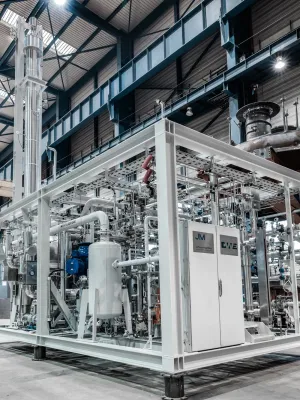
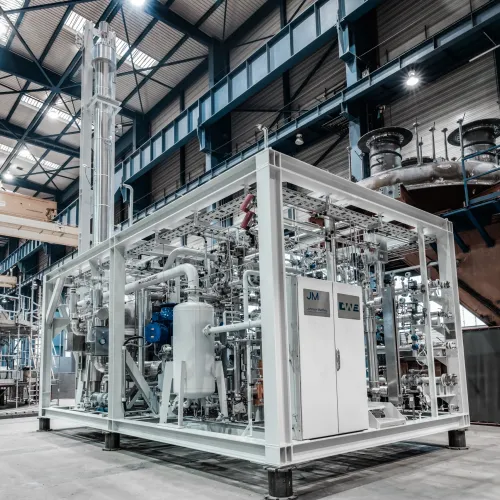
Reactors and process license for methanol synthesis; as a prefabricated, factory-tested
module.
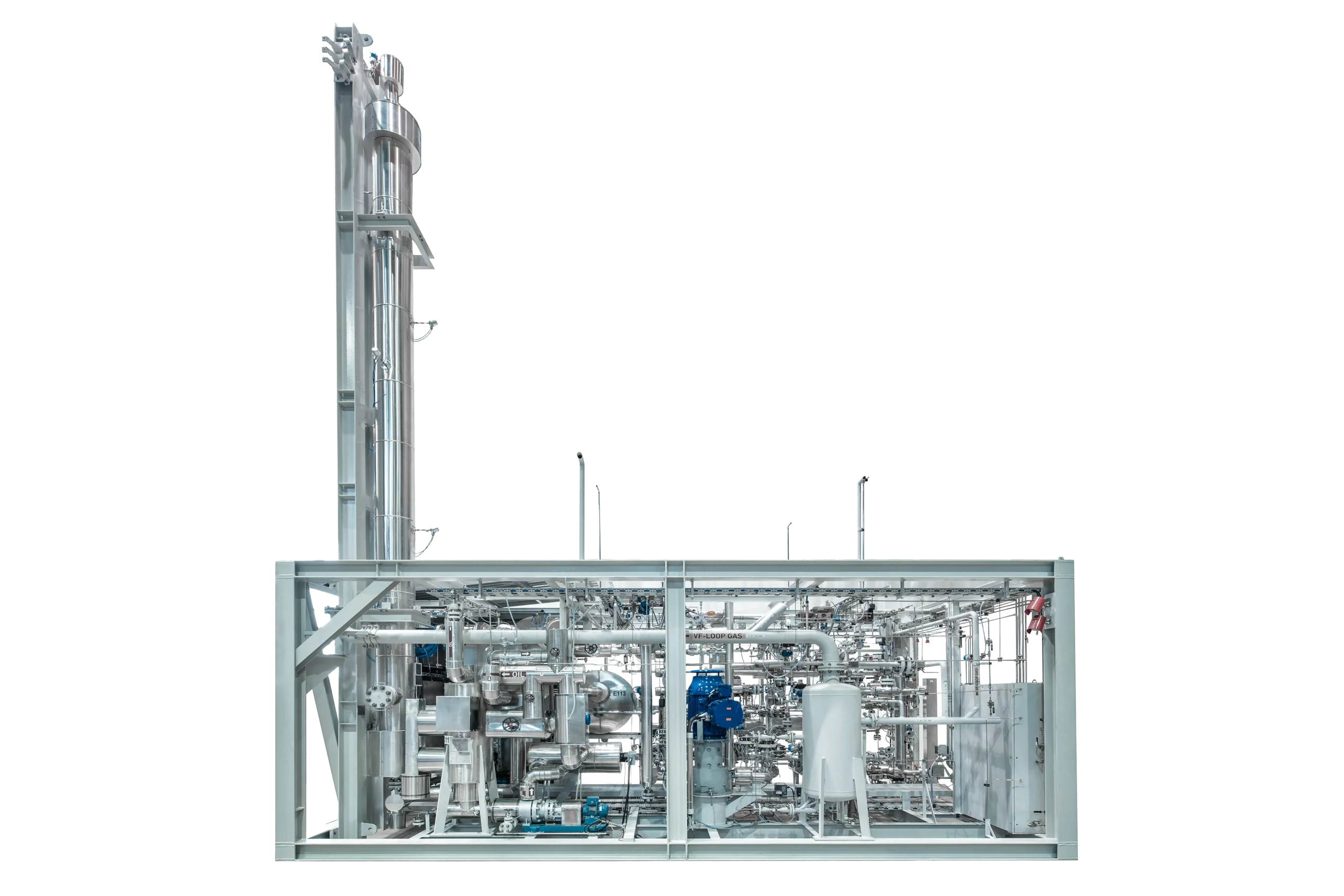
Modular construction
DWE supplies the synthesis unit as a prefabricated, factory-tested module. The demanding manufacturing and process engineering work is carried out under controlled factory conditions, while on-site activities are limited to installation, connection and commissioning. This reduces interface risks, shortens project duration and ensures consistently high, reproducible execution quality.
Shifting complexity to the factory.
Shorter construction and delivery times.
Reduced EPC costs.
Bundled responsibility from a single source.
Applications / business case
E-methanol can be used as a fuel in shipping and additionally serves as a feedstock for
further synthetic fuels and chemical products. Its liquid form offers advantages in
storage, transport, and global trade.
Applications / business case
E-methanol can be used as a fuel in shipping and additionally serves as a feedstock for
further synthetic fuels and chemical products. Its liquid form offers advantages in
storage, transport, and global trade.
Further processing into synthetic fuels
Renewable methanol can be processed into further fuels via downstream processes.
These include, in particular, sustainable aviation fuel (SAF) via alcohol-to-jet processes,
as well as further synthetic hydrocarbons. Methanol thus takes on a central role within
future Power-to-X value chains.
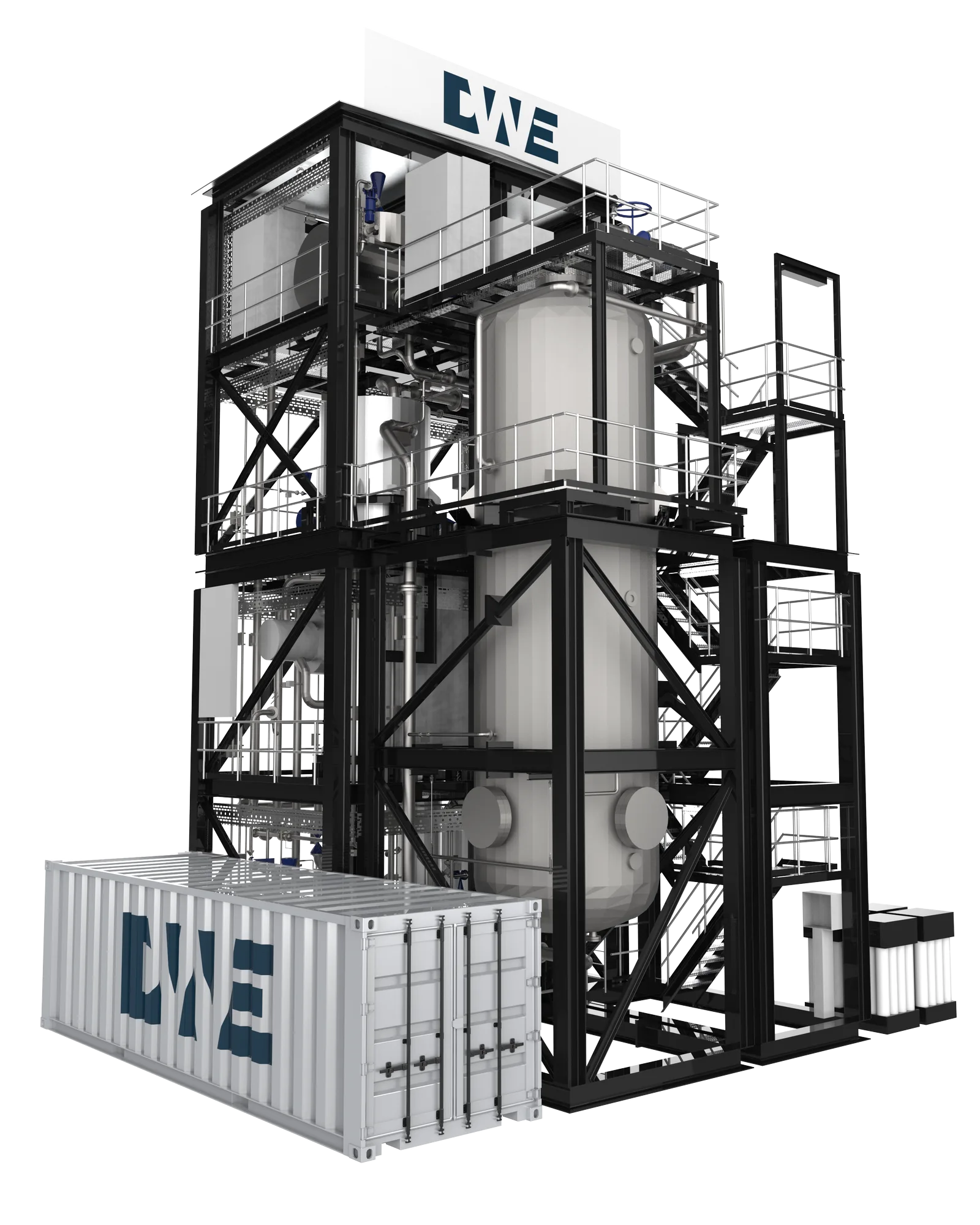
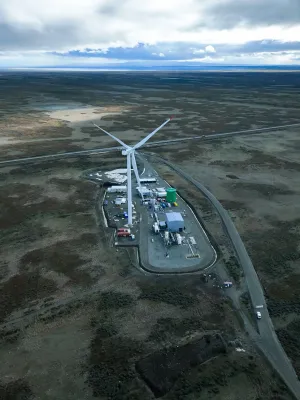
Reference
Haru Oni (Chile)
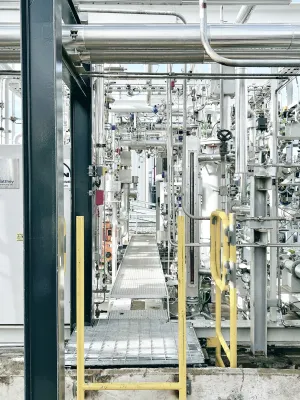
DWE e-methanol reactor in one of the world’s first integrated e-fuel plants.