E-SAF

Sustainable aviation fuel (SAF) via the Fischer-Tropsch route.

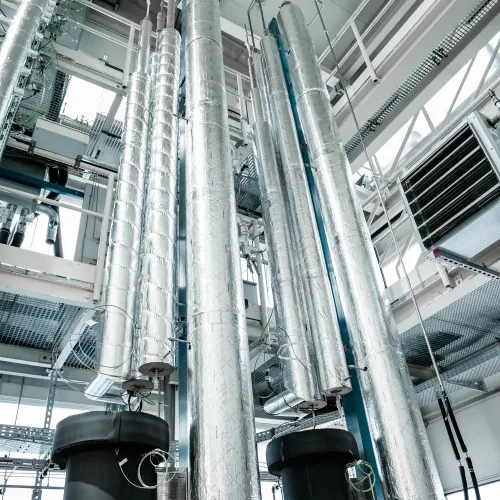
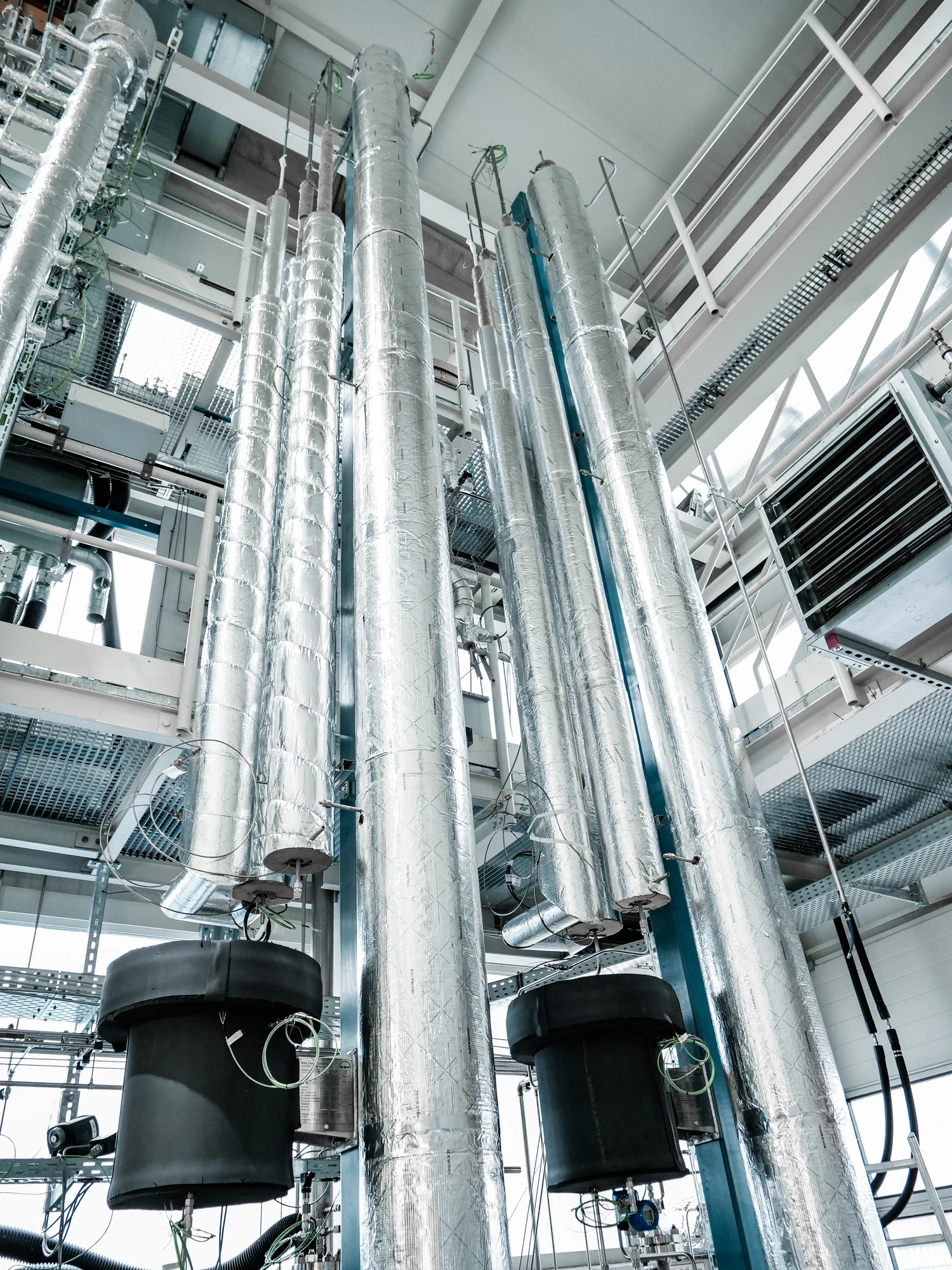
Fischer-Tropsch-Reaktor von DWE für die Herstellung synthetischer Kraftstoffe

The decarbonization of aviation requires a liquid energy carrier with high energy density and global availability. Sustainable aviation fuel (SAF) from CO₂ and renewable hydrogen is therefore among the most important Power-to-X applications. DWE supplies key reactors for the Fischer-Tropsch route and supports the industrialization of this technology from pilot scale to the large-scale plant.

The Fischer-Tropsch route to E-SAF

The production of synthetic kerosene begins with CO₂ and renewably produced hydrogen. In the first step, CO₂ is converted with hydrogen into carbon monoxide (CO) and water in the reverse water-gas shift (RWGS) process. The carbon monoxide produced, together with hydrogen, forms the synthesis-gas stream required for the Fischer-Tropsch synthesis. In the downstream Fischer-Tropsch synthesis, hydrocarbons are built up from it, which are subsequently processed into sustainable aviation fuel (SAF). The route via RWGS and Fischer-Tropsch synthesis represents a direct path from CO₂ and hydrogen to synthetic kerosene and further synthetic fuels.

The RWGS reactor from DWE and Shell Catalysts & Technologies

Together with Shell Catalysts & Technologies, DWE is developing an electrically heated RWGS reactor for industrial applications. The reactor converts CO₂ into carbon monoxide with the aid of hydrogen and thus provides a central building block for the generation of synthesis gas. It forms the interface between hydrogen production and Fischer-Tropsch synthesis and enables the use of a wide variety of carbon sources for the production of synthetic fuels.

Fischer-Tropsch-Reaktor von DWE für die Herstellung synthetischer Kraftstoffe

Industrial implementation

The economical production of synthetic fuels requires robust and scalable reactor technology. With more than 800 reactors delivered, its own process development, and experience from some of the world’s largest Fischer-Tropsch reactors, DWE has the prerequisites for the industrialization of future E-SAF projects at commercial scale.

Further Power-to-X processes

In addition to the Fischer-Tropsch route, DWE supplies reactors and apparatus for further Power-to-X processes, including methanation, methanol synthesis, and further synthesis and treatment steps for the production of synthetic fuels and chemical products.

References

Shell / DWE RWGS pilot-reactor development

Joint development of an industrially scalable RWGS reactor for E-SAF production via the Fischer-Tropsch route.

Shell Pearl GTL, Qatar

Twelve Fischer-Tropsch reactors in the world’s largest gas-to-liquids project. The Fischer-Tropsch technology used there also forms the technical basis for the production of synthetic fuels from renewable synthesis gas.