Company

DWE — Deggendorfer Werft und Eisenbau.

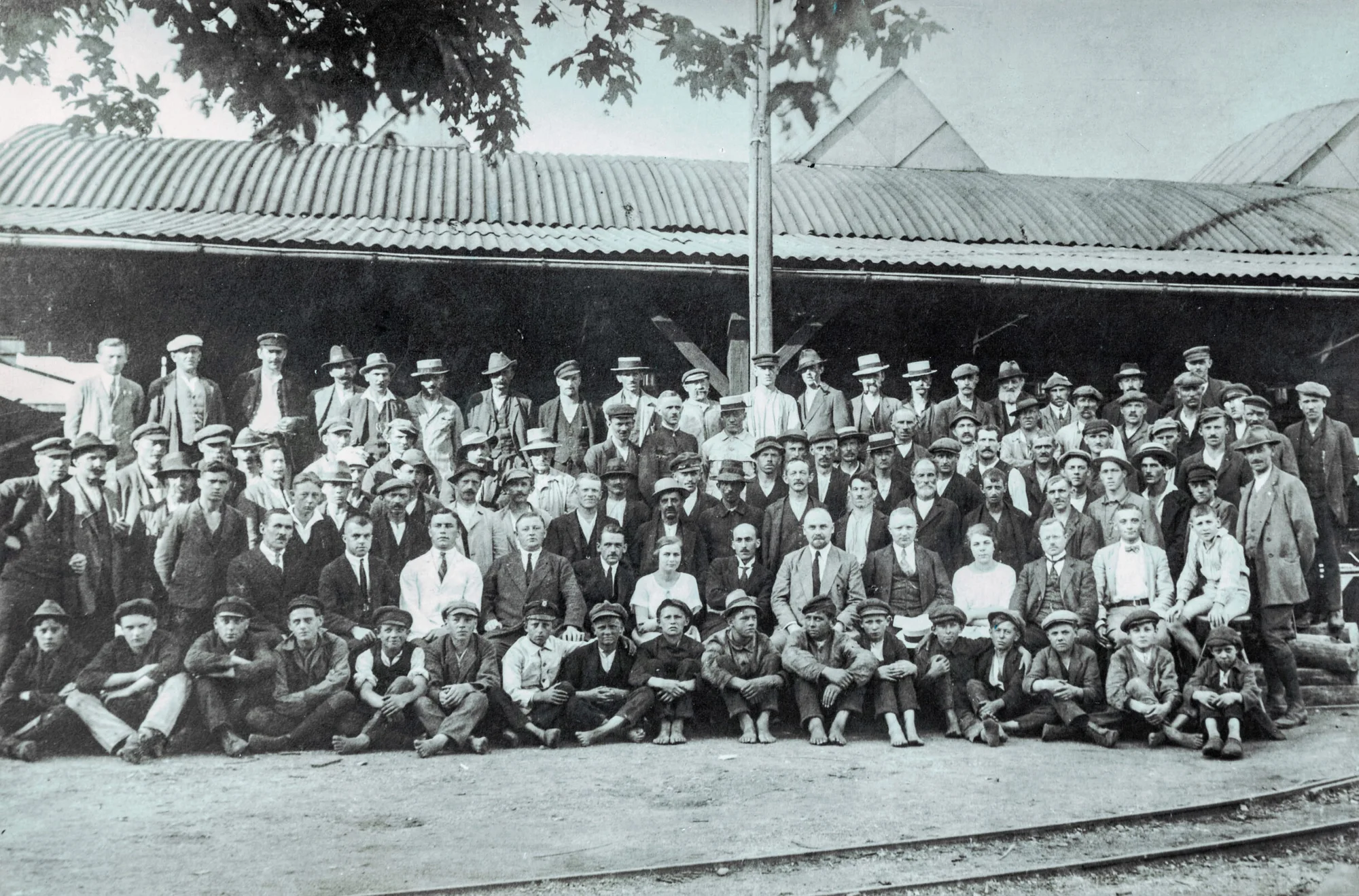
Historische Aufnahme der Deggendorfer Werft und Eisenbau aus dem Gründungsjahr 1924

More than 100 years of experience. Around 400 people. A single site that unites engineering, manufacturing, quality assurance, and service. DWE stands for industrial solutions — from classic chemistry through refinery and Power-to-X applications to fusion technology and defence.

One site, reinvented time and again

The history of DWE is a history of continuous adaptability. What began in 1924 as a shipyard on the Danube has realigned itself several times over the course of a century — from shipbuilding through dredger construction to the manufacture of chemical reactors, which distinguish the site worldwide today. One core competence remained constant throughout: the manufacture of large, precise, welded steel components. This ability to evolve with the industrial requirements of each era shapes DWE to this day — and makes the site a partner for industries in transition.
From shipyard to reactor construction — milestones

The beginnings (from 1924)

On 6 March 1924, Deggendorfer Werft und Eisenbau was founded — initially for the construction and conversion of inland vessels. In the following decades, passenger ships, ferries, and cargo ships were built; in 1958, the site developed the world’s first split hopper barge, which became known worldwide as HYDROKLAPP®.

Entry into equipment and reactor construction (from 1950)

In 1950, the Vessel and Process Equipment department was established — the foundation of today’s business. In 1955, the first reactor was built: a contact furnace with 3,700 tubes. From this beginning, through consistent development, research, and patents, grew the reactor expertise that would make DWE the world market leader.

Start of construction of the company’s own test laboratory and Technikum (from 1983)

In 1983, construction began on the company’s own test laboratory and Technikum (pilot-plant center) with pilot reactors — the basis for joint process development with customers and licensors.

Technology leadership in molten-salt reactors (from 1994)

In 1994, DWE delivered the world’s first pressure-resistant molten-salt reactor. The reactors became continuously larger and more powerful; in parallel, from 1996, the business with refinery components was established with the first FCC plant projects.

Precision for science (from 2003)

The manufacturing depth built up in reactor construction qualifies DWE for large-scale scientific projects of the highest precision. In 2003, the manufacture of the plasma vessel for the Wendelstein 7-X fusion reactor began; components for the ITER cryostat, the KATRIN vacuum vessel, particle accelerators at CERN, and the test stand for the Ariane 5 engine followed.

Focus and the energy transition (from 2001)

In 2001, shipbuilding was discontinued — DWE focused entirely on equipment, plant, and reactor construction. In the 2010s, decarbonization moved to the center: in 2012, the first reactor for what was then the largest methanation plant, in Werlte, Germany, was built; in 2022, the methanol reactor for the Haru Oni e-fuel plant in Chile.

Delivery of the 800th reactor in 2023

Ownership and affiliation

Over its history, the site was part of various industrial groups — from Gutehoffnungshütte through the MAN Group to, most recently, Everllence (formerly MAN Energy Solutions). Since 2026, DWE has operated as an independent company under the umbrella of the Munich-based investment firm Monacum Partners. This independence opens up new scope to specifically advance the technological expertise in reactor and equipment construction and to grow — on the same industrial substance that has developed at the Deggendorf site over decades.

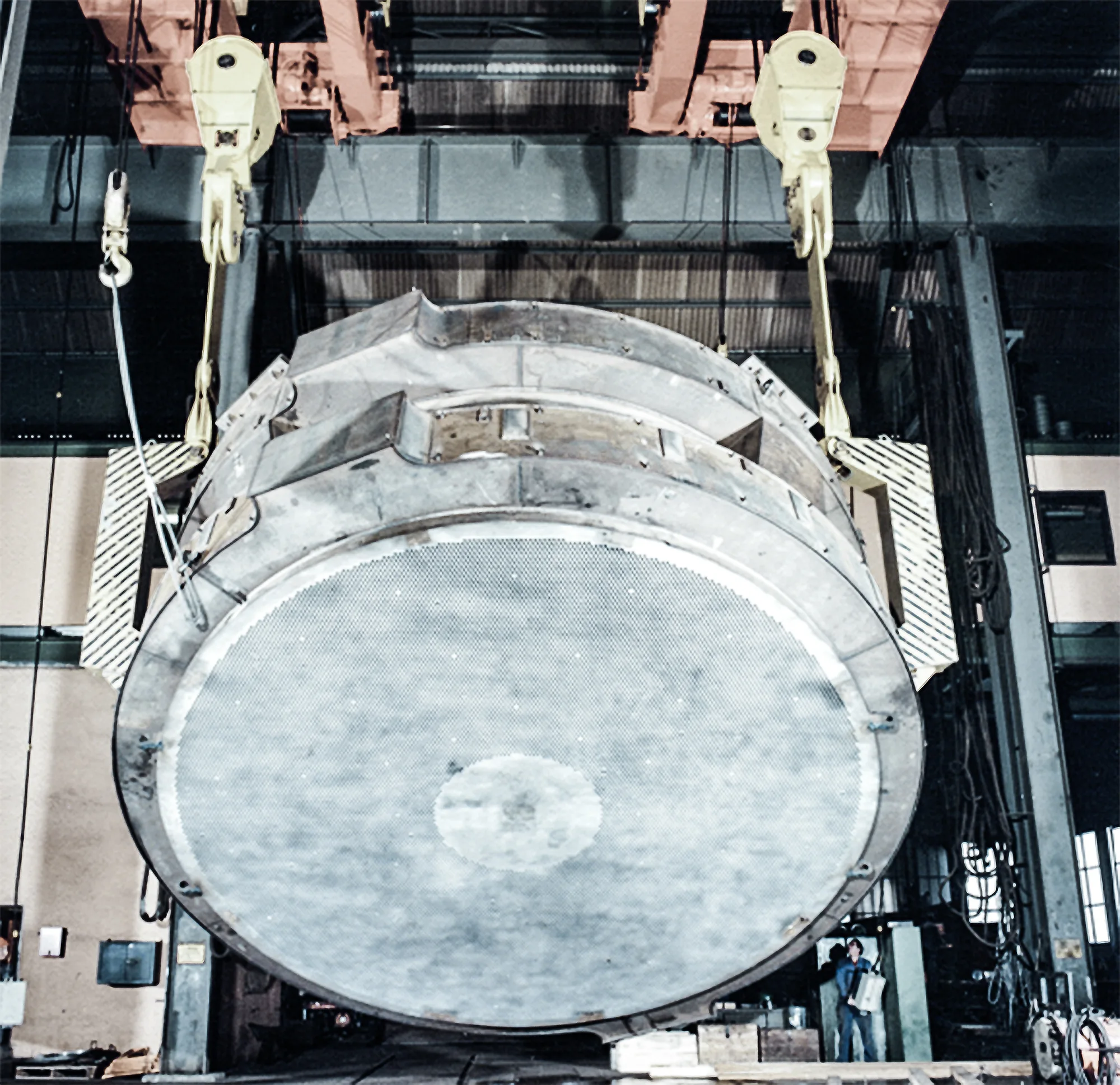
Verladung des 800. DWE-Reaktors am Donauhafen Deggendorf, 2023

Deggendorf site

At the Deggendorf site, engineering, manufacturing, testing, and documentation come together in one place. The direct location on the Danube is more than historical: the waterway allows the transport of large and heavy components. Manufacturing halls and crane capacities are designed for components up to 1,500 t and several meters in diameter — dimensions that only a few sites worldwide can master.

People at DWE

Around 400 people in Deggendorf work on systems and components that stand for safe and reliable operation worldwide. They design, weld, test, and deliver — with a commitment to quality that knows no exception. This combination of manufacturing know-how passed down over generations and the willingness to develop solutions without a blueprint is the site’s true asset.

1924

Foundation of DWE, Deggendorfer Werft und Eisenbau

1950

Establishment of the Vessel and Process Equipment department

1955

Construction of the first reactor

1958

World’s first split hopper barge (HYDROKLAPP)

1960

Delivery of the 25th reactor

1970

Delivery of the 200th reactor

1974

Delivery of the 300th reactor

1983

Start of construction of the test laboratory and Technikum (pilot-plant center) for pilot reactors

1985

Delivery of the 400th reactor

1987

Launch of the Mozart, then the largest river cruise ship

1994

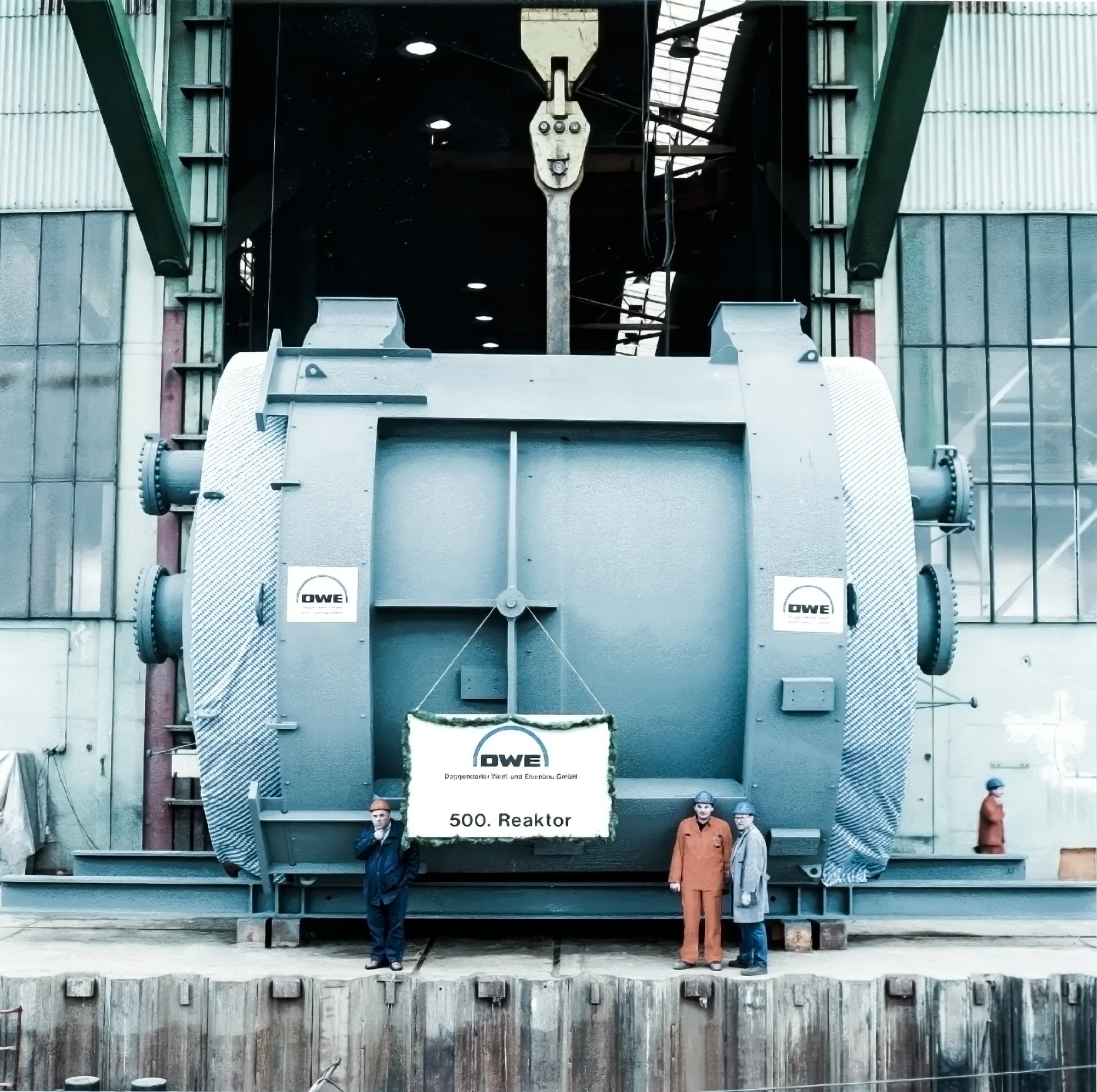
Manufacture of the world’s first pressure-resistant molten-salt reactor and delivery of the 500th reactor

2001

Discontinuation of shipbuilding

2003

Start of manufacturing of the plasma vessel for the Wendelstein 7-X fusion experiment; delivery of the 600th reactor

2012

Delivery of the first methanation plant

2013

Delivery of the 700th reactor

2023

Delivery of the 800th reactor

    Vision — Securing the Future

    DWE stands for industrial solutions that secure the future: through security of supply, technological sovereignty, resilient energy supply, and the mastery of highly complex applications. The expertise that has grown over a century in the construction of ships, equipment, and reactors flows today into the technologies of the energy transition and into future fields such as fusion technology. Heritage in heavy engineering. Built for transitions.